Standing in dirty, ankle-deep shower water is indeed an unpleasant situation, but a few small fixes can help you get your shower back to normal.
Here’s how to unclog a shower drain with standing water, starting right now: pull off the drain cover and clear out any hair or gunk sitting right at the opening. If the water’s still not moving, grab a plunger and work it to build suction and break the clog loose. Still stuck? Use a drain snake — it helps you reach buildup stuck farther inside the pipe.
This guide covers necessary troubleshooting steps to try before calling a plumber near you. Keep reading and follow each step to find the fix that works for you.
Why Is My Shower Drain Not Draining?
A clogged shower drain with standing water happens for different reasons in different homes. But you can figure out a lot from the way your shower backs up. Before getting into the different fixes, let’s look at what your drain’s behavior is telling;
Water starts pooling within seconds
If water rises as soon as you turn on the shower, the blockage is usually close to the drain opening. Check the drain cover, hair catcher, and the first few inches of the drain where hair and debris often collect.
The water goes down slowly but never fully clears
When the water level drops slowly but does not return to normal, the pipe is likely partially blocked. This usually happens when buildup has narrowed the inside of the pipe instead of creating a complete blockage.
The drain clears but clogs again after a few days or weeks
A clog that keeps coming back usually means the first fix only removed what was easy to reach. Something deeper in the pipe may still be catching hair, soap residue, and other debris.
You hear gurgling sounds or notice other drains slowing down.
These signs point to a problem beyond the shower drain itself. Air trapped in the plumbing line or a blockage farther down the system may be affecting how water moves.
How to Unclog a Shower Drain With Standing Water: Easy Methods
Start with the easiest fix and only move to the next method if the water is still sitting in the shower. There’s no reason to reach for a drain snake if a simple cleanout solves the problem.
Before You Start: Three Safety Rules
- Never plunge or snake a drain that has chemical cleaner in it: If you have already poured Drano or a similar product down the drain, the water sitting in your shower is now caustic. Plunging it splashes that liquid onto your skin, your eyes, and every surface nearby. Wait for the drain to clear on its own, or let a plumber remove the water first.
- Never mix two drain products: Adding a second cleaner, or pouring vinegar on top of a commercial one, can release fumes in a small closed bathroom. One product at a time, and only one.
- Wear gloves and eye protection: Standing shower water carries hair, soap residue, and bacteria, and a snake can flick debris back at you as it comes out. Rubber gloves and safety glasses take seconds to put on. Leave the bathroom door open and the fan running while you work.
Method 1: Remove What’s Sitting at the Drain Opening
Take off the drain cover and shine a flashlight into the drain.
Shower drain covers do not all come off the same way, and forcing the wrong type is how people crack the fitting or strip the screw. Check which one you have first:
- Screw-in: One visible screw in the middle. Back it out with a Phillips screwdriver, then lift the cover straight up.
- Snap-in or push-in: No screw and no moving parts. Work a flathead screwdriver under the rim, wrap the tip in a cloth so it does not scratch the base, and lever it up evenly from two or three points rather than prying hard on one side.
- Lift-and-turn: A small knob sits on top. Hold the body of the stopper still, turn the knob counter-clockwise, then lift it out.
- Toe-touch or foot-actuated: Press it once so it pops up, then unscrew the cap by hand while holding the base steady.
If you can see hair or debris once the cover is off, remove it using any of these tools:
- Needle-nose pliers
- A plastic drain zip tool
- A bent wire hanger
Keep pulling until nothing else comes out. Don’t stop after the first clump—there’s often more wrapped around the drain opening.
Pour a small amount of water into the drain. If it flows away normally, replace the cover and you’re done. If the water still pools, move on to the next method.
Method 2: How to Plunge a Tub or Shower Drain
If after removing visible debris, standing water in the shower won’t drain, use a plunger. A plunger has a suction cup that works best with water and helps loosen the clog.
Use the right plunger: A flat cup plunger (the simple rubber type) works best for a shower drain. A toilet plunger with an extended rubber flap usually won’t sit flat enough to make a good connection.
Block the overflow opening if there is one: If you’re working on a bathtub, cover the overflow plate under the faucet with a wet cloth or tape. This keeps the pressure focused on the drain instead of letting air escape. Most walk-in showers don’t have this opening, so you can skip this step.
Make a tight seal: Keep about an inch or two of water around the plunger cup so it can grip properly. Place the plunger directly over the drain and press down slowly once to remove any trapped air. If the seal feels weak, applying a small amount of petroleum jelly around the edge can help.
Plunge with steady pressure: Push down firmly, then pull up quickly while keeping the plunger attached to the drain. The upward pull is what helps loosen the clog, so avoid lifting the cup away between strokes.
Repeat the process: Continue for about 15–20 strokes, then lift the plunger and check the water level. If the water starts moving, repeat the process until the drain clears. If there is no change after several rounds, move on to the next method.
Check the drain afterward: Once the water starts flowing, run hot tap water for a couple of minutes. A cleared drain should empty smoothly without slowing down or making unusual sounds.
The same technique applies to plunging a bathtub drain, where covering the overflow matters even more.
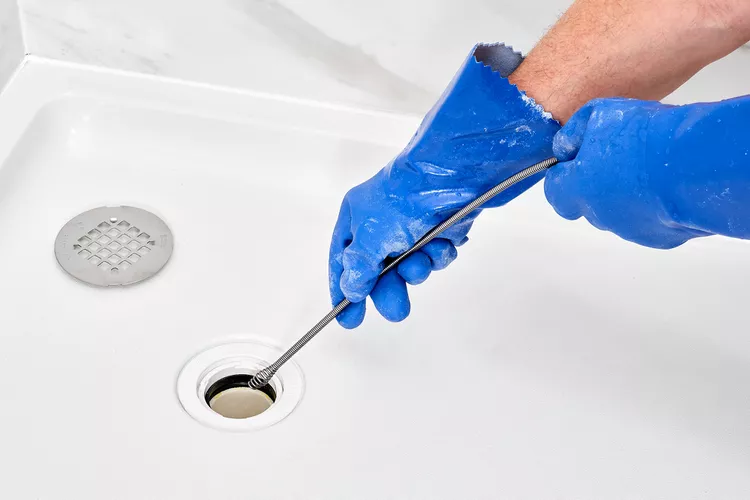
Method 3: Reach the Clog With a Drain Snake
If plunging doesn’t clear the clog, a drain snake can reach blockages deeper inside the pipe.
Feed the cable slowly into the drain while turning the handle. When you feel resistance, keep rotating gently instead of forcing it forward. Once the snake reaches the clog:
- Turn the handle to catch or break apart the blockage.
- Push forward a few inches, then pull back slightly.
- Repeat until the cable starts moving more freely.
Slowly pull the snake back out while removing any debris it collects. Afterward, run hot water through the drain for a few minutes to wash away any loosened material.
Know the limit of the tool, though. A hand-fed snake reaches the P-trap under the shower and a short run of pipe past it, and that is about all. Tub and shower lines usually sit below the floor with no cleanout within easy reach, so if the blockage is farther down than the cable can travel, you will feel it stall in the same spot no matter how much you feed in.
Busting the Baking Soda and Vinegar Myth
This one deserves an honest answer because it’s recommended constantly online and often overpromised.
The fizzing reaction from a baking soda and vinegar shower drain treatment can loosen light soap scum and freshen a stale drain, but it won’t remove a solid hair clog. With standing water already in the shower, the mixture gets diluted before it can reach the blockage.
Treat it as light maintenance, not a fix. It’s no substitute for removing the clog physically or using a drain snake.
Does Drano work on Shower Drains?
Because their labels mention tub and shower use, yes, they can be used. But there are a few things to understand before expecting them to solve every clog.
Each Drano bottle has strong chemicals that create a heat-generating reaction. Against a soft soap-and-grease film, they can sometimes open enough of a channel for water to move again. Against a dense mat of hair, results are inconsistent.
The reality with Drano is that it may burn a small path through a clog, but it does not always remove stubborn buildup stuck to the inside walls of the pipe. In simple terms, Drano gives a temporary relief, does not remove the tough residues coated inside the pipe walls.
Safety Note: Picking up a bottle for minor to major clogs every few months won’t solve the real issue and may damage rubber seals in older pipes. Instead of pouring another cup of chemicals, try the alternatives we discussed above.
And one rule worth repeating: the moment a chemical cleaner goes in, the plunger and the snake are off the table until that water is gone. If you end up calling someone out, tell them what you poured and roughly how much before they start work, so they can protect themselves as well.
Should I Call a Professional to Clear a Clogged Shower Drain?
Some situations are beyond what DIY tools can fix, and pushing further can make things worse.
Contact a nearby plumber, if more than one fixture is affected, your shower and toilet both backing up, or you notice sewage smells in the bathroom. This situation refers to a deep blockage rather than a simple drain clog.
It is also worth calling if the clog keeps returning after you clear it. A slow draining shower drain that repeatedly comes back may mean there is heavy buildup or another issue further down the pipe. Clearing it again and again only provides temporary relief.
If you have already removed the hair, tried plunging, and used a drain snake for shower drain clogs but the water still will not move, it is time to stop. A professional can use stronger equipment to reach deeper blockages and inspect the pipe to find the actual cause. That matters in older Columbia homes in particular, where the shower line often runs under a slab or through a tight crawlspace and there is no cleanout positioned close enough to reach the blockage by hand.
How to Prevent Shower Drain Clogs
Once your blocked shower drain is fixed, keeping it clog-free requires adding a few simple habits:
- Use a drain screen and empty it regularly: A silicone or mesh hair catcher stops most hair before it enters the pipe. Cleaning it once a week prevents buildup from collecting inside the drain.
- Flush the drain with hot water: Once a week, run hot water for a few minutes to help move soap residue and oils before they settle inside the pipe.
- Reduce soap buildup: Liquid body wash usually leaves less residue than bar soap. If you have hard water, an occasional vinegar flush can help slow mineral buildup.
- Fix slow drainage early: A drain that is slightly slow today can become fully blocked later. Removing early buildup takes minutes compared with dealing with a complete clog.
Final Thoughts
A clogged shower drain can turn a normal shower into a frustrating problem, but knowing how to unclog a shower drain with standing water helps you choose the right approach instead of trying random fixes.
The goal of trying DIY methods is not only to save money or get temporary relief. It is about choosing the right approach that removes the actual cause of the problem instead of only hiding the symptoms. If the same clog keeps returning despite using different tools or cleaners, it may be a sign that the blockage needs a deeper solution.
Still ankle-deep after working through every method above? That is the point where guessing costs more than asking. City Local Plumbing clears clogged showers, tubs, and drains for homeowners across Columbia and the surrounding Midlands, and the line stays open 24/7 — call (803) 884-8163.
For anything that cannot wait until morning, we are the emergency plumber Columbia households call at any hour.