
Kitchen Drain Cleaning Services in Columbia, SC
Standing water in the sink with dinner still half-cooked?
Our Columbia plumbers clear grease, food, and garbage disposal clogs the same day, and you know the price before we start. No hourly meter, no surprises added at the end.
Same-Day Service | Experienced Columbia Plumbers | Upfront Pricing | Serving Richland & Lexington County
Same-Day Service
Most Columbia kitchen drain calls handled the same day, often within hours.
No Upsell
If cabling clears it, we say so. We do not sell jetting you do not need.
Columbia Local
Based in the Midlands, not a national call center three states away.
Columbia is the capital of South Carolina, USA. The second largest city in the state, has a population of 136,632 persons at the 2020 census. An estimated 870,000 people live in the Columbia metropolitan area. Columbia is the seat of Richland County and parts of the city are in the adjacent Lexington County and Kershaw County. The term “Columbia” is a poetic one used for the United States, and comes from the name of Christopher Columbus, who sailed for the Spanish Empire in the Caribbean.

Clogged Kitchen Sink in Columbia? We Clear It the Same Day
It always happens at the worst possible moment. The pot is on the stove, the sink is half full of grey water that will not budge, and the garbage disposal is just humming at you like it has given up. You flip the switch again. Nothing moves.
That backup is not going to clear itself, and hot water only buys you a few minutes. Our kitchen drain cleaning services in Columbia deal with the real cause, whether that is hardened grease, packed food waste, or a blocked branch line, instead of pushing the problem further down the pipe.
We work across Columbia, greater Richland County, and the wider Midlands, and most kitchen sink calls get handled the same day. You will get a straight answer about what is wrong and a flat price before anyone opens a toolbox.
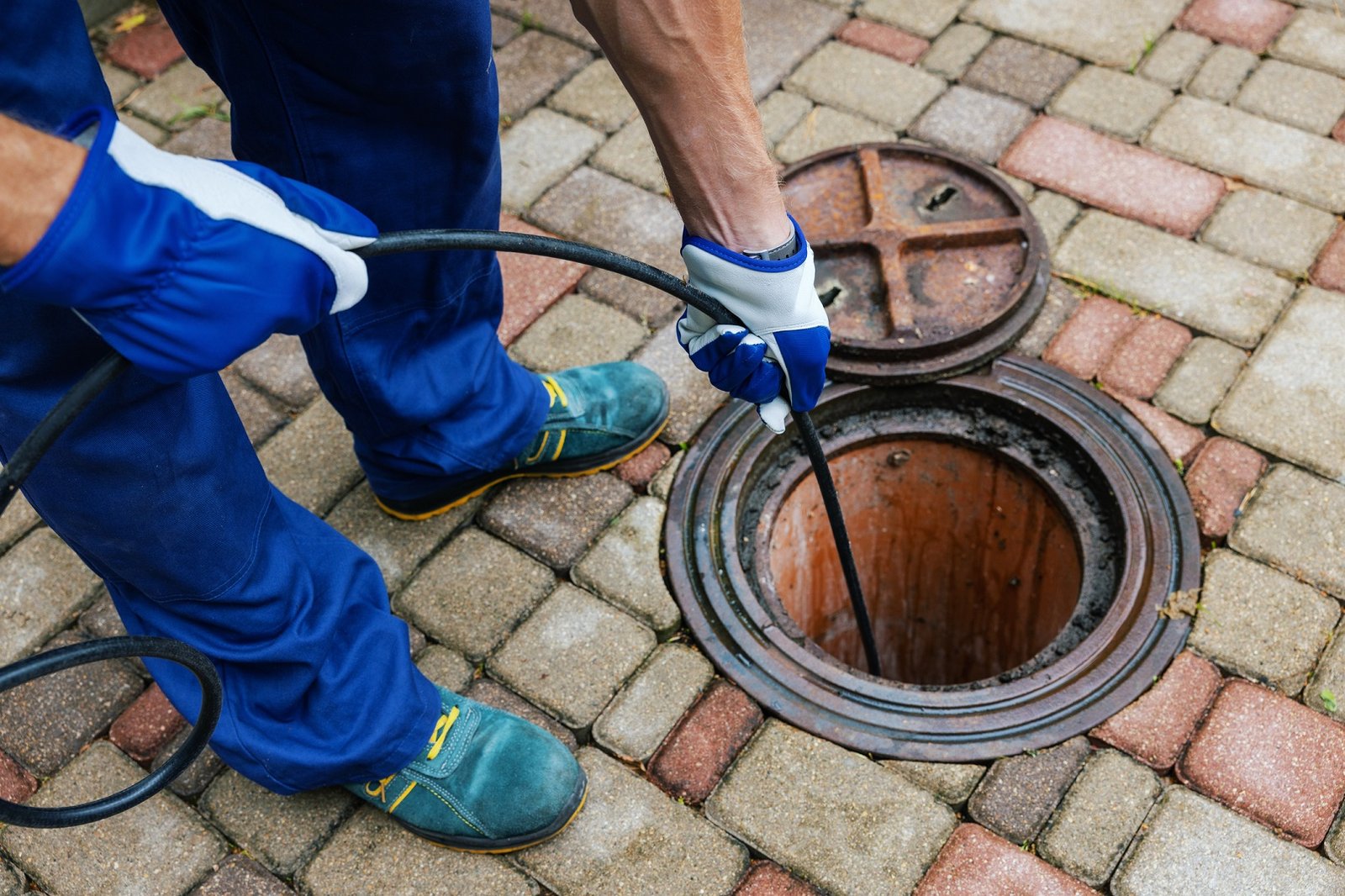
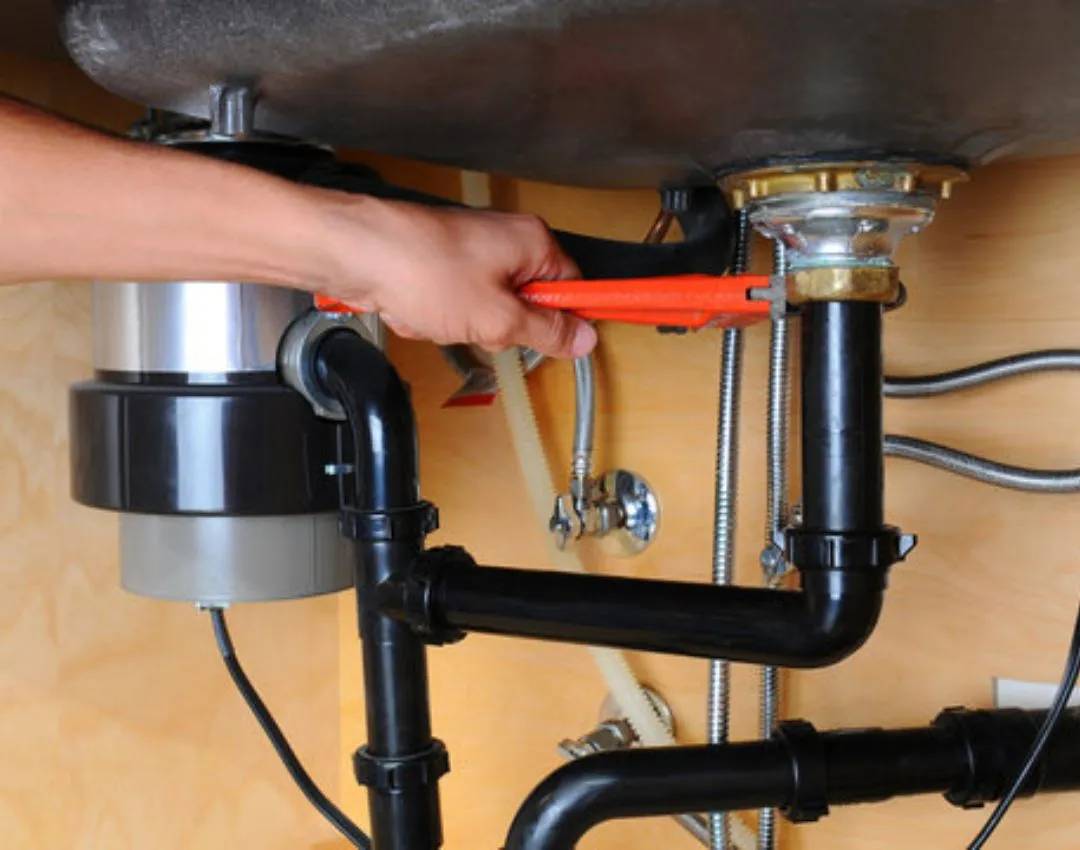
Why Kitchen Drains Clog More Than Any Other Drain in Your Home
Here is something most homeowners never find out until there is a problem: your kitchen sink drains through the narrowest pipe in the house. The tailpiece and branch line under there are usually about an inch and a half wide, while your main sewer line runs three to four inches. Everything else in your home has room to breathe. Your kitchen does not.
Then there is what actually goes down it. Fats, oils, and grease, or FOG as plumbers call it, pour down warm and liquid, then cool within a few feet of pipe and turn semi-solid. Layer by layer it coats the pipe wall like plaque in an artery. Columbia’s hard water makes it worse, because dissolved calcium and magnesium bond with that grease and soap film to form a chalky scale that no amount of hot water will rinse away.
Your kitchen is also the only spot where three appliances fight over one drain. The garbage disposal grinds food into a slurry, the dishwasher drain hose dumps starchy, greasy wash water into the same tailpiece, and the sink handles everything else. If that shared line is already narrowed, the dishwasher cycle is usually what tips it into a backup.
What Should Never Go Down a Kitchen Drain
The Worst Offenders We Pull Out of Columbia Kitchen Lines
Coffee grounds. They do not dissolve. They settle and pack down hard in the P-trap.
Eggshells. The disposal grinds them into a gritty sand that binds with grease.
Rice and pasta. They keep absorbing water and swelling for hours after they go down.
Potato peels and starchy scraps. They turn into a paste that glues everything else together.
Cooking oil and bacon fat. The number one cause of repeat kitchen clogs we see in the Midlands.
Warning Signs You Need Kitchen Drain Cleaning
A kitchen drain almost never fails without warning. It gives you weeks, sometimes months, of small hints before the sink finally stops draining altogether. Catching it early is the difference between a quick clearing and a flooded cabinet floor.
Here is how to read what your sink is telling you.
If you are seeing anything in the top half of that table, you still have time. Once you hit standing water or clogs that keep coming back, the pipe is telling you the problem is no longer near the surface, and a plunger is not going to reach it.
| Sign | Likely Cause | What It Means |
|---|---|---|
| Water drains slowly | Grease coating the pipe walls | Partial blockage, early stage |
| Gurgling sound after draining | Air trapped behind the clog or a vent issue | Clog is building up |
| Foul or rotten smell | Decaying food in the P-trap or disposal | Organic buildup |
| Water backs up in the other basin | Blockage past the tee fitting | Deeper branch line clog |
| Sink backs up when the dishwasher runs | Shared drain line is blocked | Disposal knockout plug or line clog |
| Standing water that will not move | Full blockage | Emergency, call now |
| Clogs returning every month | Heavy buildup or damaged pipe | Needs a camera inspection |
How to Clean a Kitchen Sink Drain Yourself (And When to Stop)
Cleaning a kitchen sink drain yourself is realistic more often than people expect. Plenty of kitchen clogs are soft, shallow, and sitting within arm’s reach of the sink basket. Before you call anyone, it is worth spending twenty minutes on the basics. Work through these in order, because each step goes a little deeper than the last.
- Flush with boiling water. Boil a full kettle and pour it down in three or four stages, giving it fifteen seconds between pours to work on the grease. This is safe for metal drain lines. If you have PVC under the sink, use very hot tap water instead, because boiling water can soften plastic joints and glued fittings.
- Baking soda and vinegar. Pour half a cup of baking soda into the drain, follow it with a cup of white vinegar, and cover the opening with a plug for ten minutes. The reaction loosens soap film and light grease. Finish by flushing with hot water for a full minute.
- Plunge it properly. Most people skip the part that actually matters. Use a flat cup plunger, seal the second basin with a wet rag, and hold it down hard, otherwise the pressure escapes sideways. On a disposal side, block the dishwasher hose port too, then plunge in short, firm strokes for about thirty seconds.
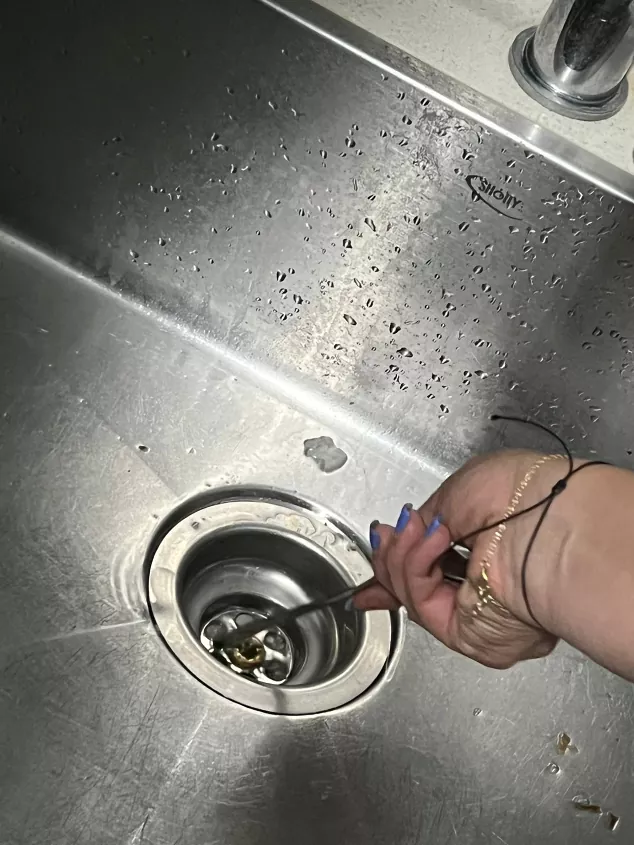
- Clean the P-trap. This is the most effective thing you can do without tools, and it is where most kitchen clogs actually live. Put a bucket underneath, loosen the two slip nuts by hand, and drop the trap. Clear out the sludge, rinse it, check the washers, and reassemble snugly, hand tight plus a quarter turn.
- Run a hand auger. With the trap off, feed a 25-foot hand auger into the trap arm heading toward the wall. Crank slowly and let the cable find the blockage rather than forcing it. If you hit something solid within a few feet, you may be able to break it up and pull it back.
When to Stop DIY and Call a Plumber
Some clogs are not stubborn. They are a symptom of something further down the line. Stop and pick up the phone if:
- The same clog has come back more than twice
- Another fixture is affected too, which points to a branch or main sewer line problem
- You notice a sewage smell, or water backing up anywhere else
- You have already poured a chemical drain cleaner down there, and your plumber needs to know before they open the pipe
- Any joint under the sink has started to drip or leak
Tried all of it and the sink still will not drain?
Book a same-day appointment with City Local Plumbing and we will clear it properly, with the price agreed before we start.
Should You Use a Chemical Drain Cleaner on a Kitchen Sink?
Short answer: not on a kitchen sink.
Caustic gels are built for hair and soap. On a grease plug they stall, and on old cast iron they do real damage. Here is why.
The honest answer from almost every plumber in the Midlands is no, or at least not on this particular drain. A drain cleaner for kitchen sinks is the one place these products perform worst, and the one place they do the most damage.
We get asked about it constantly, usually after someone has already tried it. So here is what a chemical drain cleaner on a kitchen sink actually does once it goes down the pipe.
Store-bought bottles fall into three groups. Caustic cleaners use sodium hydroxide, or lye, to generate heat and break down organic matter. Oxidizing formulas rely on bleach or peroxides. Acidic products, usually sold to trades, use sulfuric acid and are aggressive enough to eat metal. All three are designed for soft hair and soap clogs, the kind you get in a bathroom.
Kitchen clogs are different. A grease plug is dense, waxy, and sits above standing water. The gel sinks through that water, spreads across the top of the blockage, and stalls there. It reacts with the pipe and whatever water is trapped around it far more than with the clog itself, which is why the sink is usually still slow the next morning.
What That Reaction Actually Damages
- Cast iron drain lines. Common in Columbia’s pre-1980 homes across Shandon, Rosewood, Earlewood, Elmwood Park and Melrose Heights. Repeated caustic exposure accelerates internal corrosion in pipe that is already thinning, and it shortens the window before pipe replacement becomes the only option.
- PVC joints and glued fittings. The heat generated can soften solvent-welded connections.
- Rubber gaskets and slip-joint washers. They harden, shrink, and start weeping.
- Garbage disposal seals and the splash guard. Degraded from the inside out.
There is a safety side too. If the sink is holding water and you reach in with a plunger or an auger afterward, you are agitating caustic liquid at face level. Splash-back burns from that exact situation are common, and they are avoidable.
A better routine is a bio-enzymatic treatment once a month. It works slowly, using bacteria and enzymes to digest the grease film rather than burn it, and it is safe on every type of pipe in your house. It will not rescue a fully blocked sink, but used regularly it keeps you from ever getting one.
How We Professionally Clean Kitchen Drains
Drain Snaking With a Cable Machine
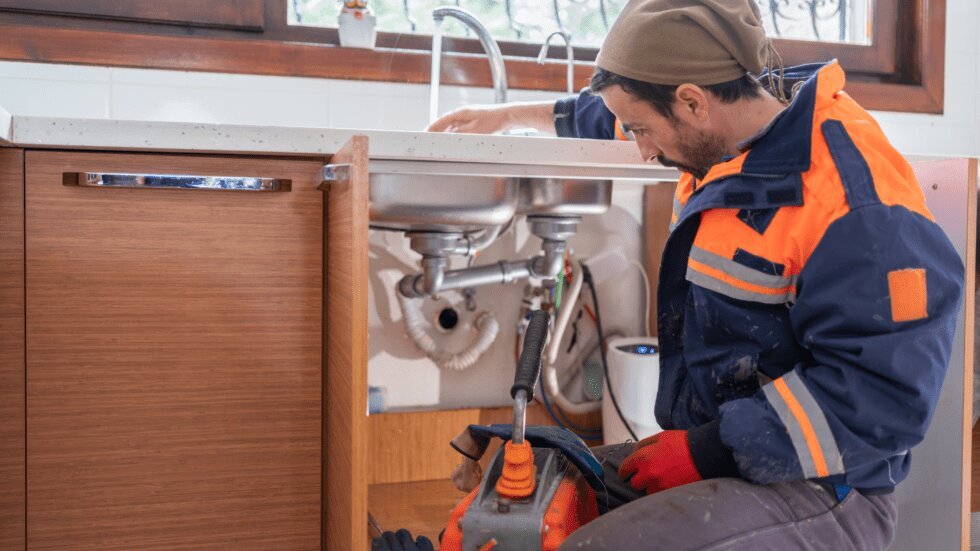
A cable machine sends a rotating steel cable down the line to break up and pull back whatever is blocking it. The skill is in the cutter head, because a 1.5 to 2 inch kitchen branch needs a correctly sized head. We feed from the trap arm and work back toward the branch until the cable runs completely free.
Hydro Jetting at 1,500 to 4,000 PSI
Snaking punches a hole through grease. Hydro jetting removes it. A specialized nozzle sends high-pressure water forward to open the line and backward to strip hardened grease and scale off the pipe wall, restoring the full original diameter. For a greasy kitchen line, this is the difference between a temporary fix and a real clean.
Sewer Camera Inspection
When clogs keep coming back, the pipe itself is usually the reason. We run a camera through the cleanout to see exactly what is happening: a sag holding water, heavy scaling inside old cast iron, an offset joint catching debris, or a crack letting roots in. You see the footage with us, and it feeds straight into a full plumbing inspection when the pipe needs one.
Garbage Disposal Service and Reset
Sometimes the drain is fine and the garbage disposal is the problem. We free jammed impellers, clear debris from the grind chamber, and reset units that have tripped their overload. We also check the disposal knockout plug, which causes constant dishwasher backups when an installer leaves it in place.
P-Trap and Branch Line Clearing
Most kitchen clogs live in the P-trap or just past the tee where a double sink joins. We drop the trap, clear the sludge, inspect the washers and slip nuts for wear, then clear the trap arm and branch line back to the stack before reassembling everything leak-tight.
Dishwasher Drain Line Clearing
If your sink only backs up during a wash cycle, the shared drain line is the culprit. We clear the dishwasher drain hose, check the air gap or high loop, confirm the knockout plug was removed, and flush the line so both appliances drain the way they should.
Snaking or Hydro Jetting: Which One Do You Need?
Both tools clear a drain. They do not do the same job, and picking the wrong one is why so many kitchen clogs come back a few weeks later.
| Drain Snaking | Hydro Jetting | |
|---|---|---|
| Best for | Soft food clogs, sudden blockages | Hardened grease, scale, repeat clogs |
| What it does | Bores through the blockage | Strips buildup off the pipe wall |
| Result | Flow restored | Full pipe diameter restored |
| How long it lasts | Weeks to months on greasy lines | Typically a year or more |
| Older cast iron | Safe, standard approach | Pressure adjusted after a camera check |
| Cost | Lower | Higher upfront, fewer callbacks |
If your kitchen sink clogs once after a big cooking weekend, snaking is the sensible call. If it has clogged three times this year, jetting is what actually ends the cycle. Not sure which one your line needs? Our wider drain cleaning services in Columbia always start with a diagnosis, not a guess.
Why Columbia Homeowners Call City Local Plumbing
Same-Day Local Response. We are based here, not routed through a call center three states away. Most kitchen drain calls in Columbia get a plumber out the same day, often within hours.
Upfront Flat Pricing. You get one number before the work starts, and that is the number on your invoice. No hourly clock, no surprise line items, no charges added after the fact.
Experienced South Carolina Plumbers. Our team has spent years working on Midlands plumbing specifically, from corroded cast iron in the older neighborhoods to new PVC systems out in the suburbs. That experience shows up as a faster, more accurate diagnosis.
No Upsell, Honest Recommendations. If a simple cabling clears your line, we will tell you that instead of selling you a jetting job you do not need. We would rather earn the next ten years of your business than one oversized invoice.
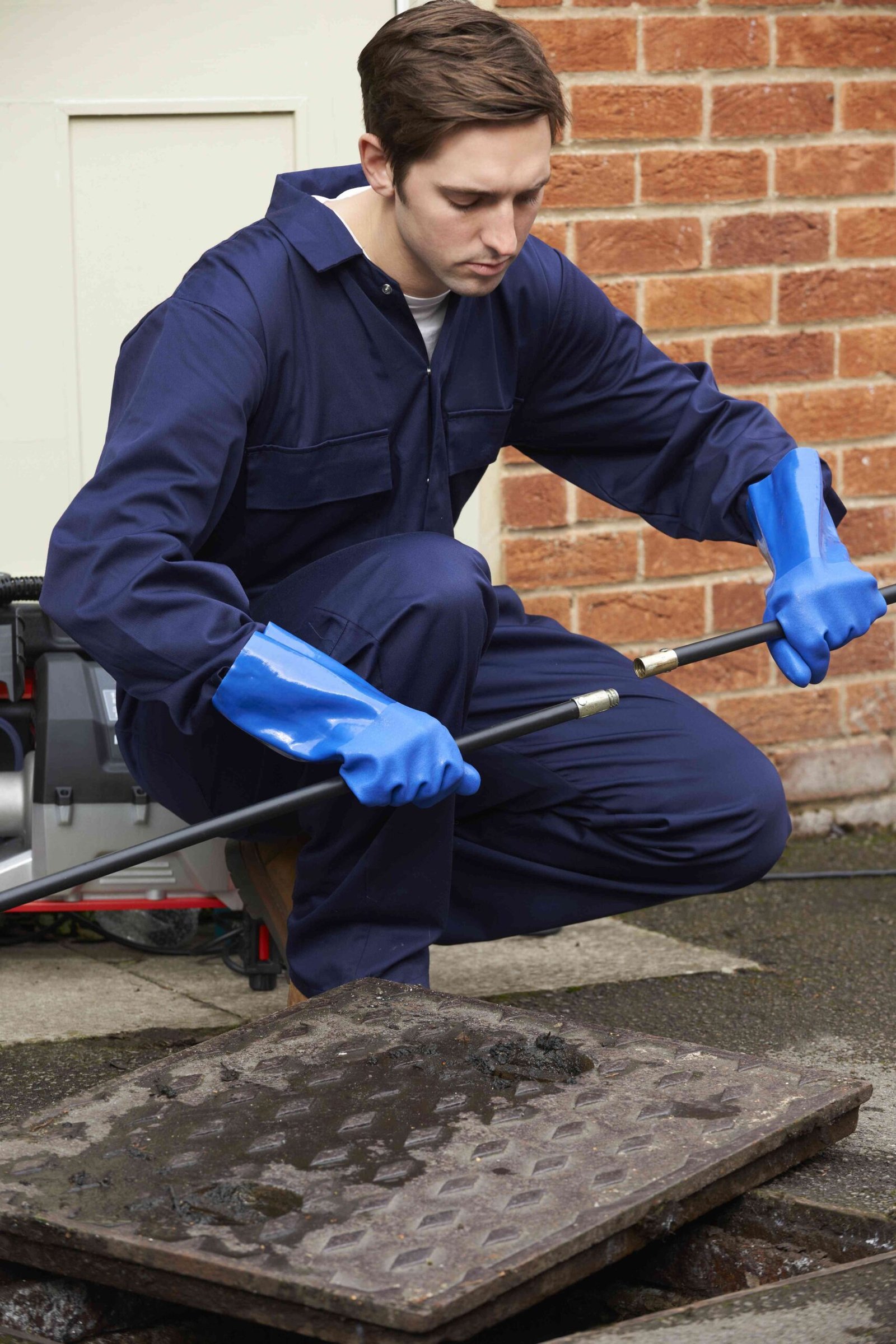
- We Verify the Fix Before We Leave
Cleaning a kitchen sink drain properly means proving it afterwards, because a trickle down the drain is not proof that the clog is gone. Before we pack up, we fill both basins and release them at once so the line takes real volume, then run the dishwasher cycle if that was part of the problem. If the blockage looked structural, we send the camera back through so you can see clean pipe wall where the grease used to be.
- Get Your Kitchen Back to Normal
A blocked kitchen sink stops everything, and it rarely waits for a convenient moment. City Local Plumbing turns up quickly, works clean, and tells you the truth about what your pipes need. We treat your kitchen the way we would treat our own, from the first phone call to the moment the cabinet is wiped down and sanitized.
Kitchen Drain Cleaning Across Columbia and the Midlands
A kitchen sink in a 1930s Shandon bungalow and one in a 2019 build off Killian Road fail for completely different reasons. Knowing the housing stock is half the diagnosis, and it is why our kitchen drain cleaning services are built around Columbia rather than dispatched from a national call center.
Read more
Older Columbia Homes: Shandon, Rosewood, Earlewood, Elmwood Park, Melrose Heights
These neighborhoods are full of character homes running original cast iron drain lines. Decades of corrosion build a rough, scaled layer inside the pipe that shrinks the usable diameter, sometimes by half. Grease grabs onto that rough surface almost immediately, so clogs return faster and hit harder. We usually recommend a camera inspection here before jetting, so the pressure matches what the pipe can safely handle.
Northeast Columbia and the Suburbs: Lake Carolina, Killian, Blythewood, Chapin, Harbison
Newer construction means modern PVC, which is smooth and forgiving. The catch is layout, because open-plan kitchens often sit further from the stack and create long horizontal runs where grease has plenty of cool pipe to settle in. Add a busy family disposal and buildup accumulates quietly for years. Preventive jetting every couple of years keeps these lines clear.
Rentals and Student Housing: Five Points, the USC Area, Olympia, Cottontown
High tenant turnover means nobody knows what has already gone down the drain, and disposals here take a beating from grease, rice, and everything that should never be in them. We work with landlords and property managers on fast turnarounds between leases, with clear invoicing and no drawn-out scheduling.
Restaurants and Commercial Kitchens: Devine Street, The Vista, Main Street, Harbison Boulevard
Commercial grease lines need real capacity, not a residential fix, and they sit inside our wider commercial plumbing services. We handle grease line jetting, grease trap servicing, and scheduled maintenance contracts that keep you compliant with the City of Columbia commercial FOG program. Most of this work gets done before opening or after close, so your service never stops.
We cover Columbia and the surrounding Midlands, including zip codes 29201, 29203, 29204, 29205, 29206, 29209, 29210, 29212, 29223 and 29229. We also run dedicated crews for Irmo, Lexington, Forest Acres and Arcadia Lakes.
- West Columbia
- Arcadia Lakes
- Lexington
- Boyden Arbor
- Coatesworth
- Columbia
- Dentsville
- Eastover
- Eau Claire
- Forest Acres
- Gadsden
- Hopkins
- Cayce
- Chapin
- Coldstream
- Gaston
- Gilbert
- Irmo
- Oak Grove
- Pelion
What Happens When Our Plumber Arrives
Same-Day Arrival and Diagnosis
Call (803) 884-8163 and you get a real time window, not a vague promise about sometime today. Your plumber rings ahead before heading over. On arrival we open the cabinet, check the trap, tailpiece and connections, then run the disposal and dishwasher to see how the line behaves under load.
Your Flat Price, Before We Start
Once we know where the blockage sits, you get a flat quote for the job rather than an hourly meter that climbs while you watch. Nothing gets done without your go-ahead, and if we find something that changes the scope, we stop and tell you first.
Clearing, Flow Test & Cleanup
We clear the line with a cable machine or hydro jetting, depending on what we found, and work it until the tool runs completely free. Then we fill both basins for a full-volume flow test, run a camera if the clog looked structural, and leave the cabinet wiped down and sanitized.
How to Keep Your Kitchen Drain Clear
Most of the kitchen backups we clear in Columbia were entirely preventable. A few habits, kept up consistently, will do more for your drain than any product on a shelf.
Never Pour Grease Down the Sink
The single biggest cause of kitchen clogs in the Midlands. Keep a jar under the sink, let the fat solidify, then bin it. Hot water and dish soap only carry it further down the pipe.
Use a Sink Strainer Basket
A three-dollar mesh strainer catches food scraps before they ever reach the trap. Empty it into the compost or trash instead of pushing it through.
Run Cold Water With the Disposal
Twenty seconds before you switch it on, twenty seconds after it clears. Cold water keeps fats firm so the disposal can chop and carry them out.
Seven Things to Keep Out
Coffee grounds, eggshells, rice, pasta, potato peels, fibrous vegetables like celery and onion skins, and bones.
Do a Monthly Flush
Run hot water for a full minute, then follow it with a bio-enzymatic drain treatment overnight to digest the grease film before it builds into a plug.
Schedule Preventive Jetting
Large households and commercial kitchens should have the line professionally cleaned once a year. Far cheaper than an emergency callout during dinner service.
Kitchen Drain Cleaning FAQ's
How much does kitchen drain cleaning cost in Columbia, SC?
A straightforward kitchen sink clearing typically falls in the $150 to $300 range. If the line has to be accessed through a cleanout, or the clog sits deeper in the branch, it runs higher. Hydro jetting a grease-packed line costs more upfront but lasts far longer. You will always get your exact flat price before we begin.
Can I use Drano or a chemical drain cleaner on a kitchen sink?
We would advise against it. Chemical gels are built for hair and soap clogs, and they struggle with dense kitchen grease, tending to settle on top of the blockage and react with your pipe instead. In older cast iron lines they accelerate corrosion. If you have already used one, tell your plumber before they open anything.
Why does my kitchen sink back up when the dishwasher runs?
Your dishwasher drains into the same line as your sink, usually through the garbage disposal. If that shared line is partially blocked, the dishwasher discharge volume is what pushes it over the edge. On newer installs it is often the disposal knockout plug, a cap that should have been removed during installation but was not.
Why is water coming up in the other side of my double sink?
Both basins meet at a tee fitting before heading to the wall. When water backs up into the second basin, the blockage sits past that tee, further down the branch line. That is beyond plunger range and usually needs a cable machine.
How long does professional kitchen drain cleaning take?
Most straightforward kitchen clogs are cleared in under an hour, including diagnosis and a flow test. Hydro jetting takes longer, generally one to two hours. If a camera inspection is needed, add another twenty to thirty minutes.
Snaking or hydro jetting: which is better for a kitchen sink?
Snaking is the right call for a sudden clog caused by food debris. Hydro jetting is better for greasy lines and recurring clogs, because it strips buildup off the pipe wall rather than boring a hole through it. If your sink clogs every few months, jetting is what actually ends the cycle.
How often should a kitchen drain be professionally cleaned?
For an average household, every two to three years keeps things trouble-free. Large families, heavy home cooks, and any home on old cast iron benefit from annual service. Commercial kitchens should be on a scheduled maintenance plan.
Do you offer same-day or emergency kitchen drain service in Columbia?
Yes. We handle same-day kitchen drain calls throughout Columbia, Richland County and Lexington County, including evenings and weekends when a sink is fully backed up. Call (803) 884-8163 and we will get you a real arrival window.
Schedule Kitchen Drain Cleaning in Columbia, SC Today
A slow sink only gets worse, and a fully blocked one will not wait until the weekend. Let us get it cleared properly the first time.
Call (803) 884-8163 to speak with a local plumber, or book online and pick a time that works for you. You will get a real arrival window, a flat price before we start, and a drain that runs the way it should.
Serving Columbia, Forest Acres, Irmo, Lexington, Cayce, Blythewood and communities across Richland and Lexington County.
Kitchen lines are only part of what we do. Our plumbers in Columbia also handle sewer lines, water heaters, leak detection and gas work.