A sudden blast of ice-cold water in the shower will ruin your whole morning instantly. That, or hearing a loud clanking noise echoing out of the utility room at 6 AM.
Nobody checks on their water heater when it works fine. It’s only after it quits that things get inconvenient. The sink fills up with greasy dishes, dirty clothes sit unwashed, and hot showers disappear right when it’s freezing out.
Taking care of the tank isn’t just about hot showers, though. It keeps your monthly power bills from creeping up and prevents hidden pipe leaks from rotting out your floorboards. Spotting a small glitch early saves you a massive plumber bill from a local Columbia service later. Catching common water heater problems early saves you a massive plumber bill later.
What Usually Causes Water Heater Failure First?
Sediment ruins storage tanks way faster than anything else. Your house is supplied with dissolved elements such as calcium and lime through plumbing pipes. These particles fall right down and accumulate along the bottom floor once the water heats up.
That unsecured sand solidifies into a dense crust directly on top of the flame or bottom heating coil after a year or two without cleaning.
Instead of letting heat pass into the water, that scale layer blocks it. Heat stays trapped under the crust. The metal floor gets insanely hot, starts popping violently, and eventually cracks way sooner than it should.
While mineral gunk takes the top spot, a few other parts break down on a regular basis too:
- Cold drafts blowing out the pilot flame on older gas tanks
- Thermostats slipping out of calibration and messing up water temp
- Lower heating coils burning out because thick scale wrapped around them
Troubleshooting Water Heater Performance
Don’t go out to buy new parts just yet. You need to figure out what actually broke first so you aren’t throwing money at parts you don’t need. Whether you’re dealing with hard water in Columbia, SC, or an older unit, checking a water heater safely takes less than ten minutes if you follow a plain, simple routine. Learning how to troubleshoot water heater setups safely takes less than ten minutes if you follow a plain, simple routine.
Check the Main Breaker Panel First
Walk over to your main electrical box. Look for the double breaker running to your heater and see if it snapped to the middle position. Switch it completely off, then back on. For gas units, check that bottom red dial; sometimes it gets bumped into pilot or off mode by accident.
Check Thermostat Temperature Dial
Kill the main breaker first, then pop off the metal access cover on your electric tank (or just look at the physical dial near the base of a gas unit). You want that dial sitting right around 120°F (49°C). Any lower and your showers turn lukewarm instantly; any higher and you’re just burning cash while risking bad skin burns.
Test Heating Elements With a Multimeter
If hot water runs out after barely two minutes, your bottom coil is likely burnt out. Cut the main power, pull back the fiberglass stuffing, and set multimeter probes onto the terminal screws on the element. If you see zero resistance or infinite continuity, that metal loop is dead and needs to come out.
Drain Out Accumulated Sediment
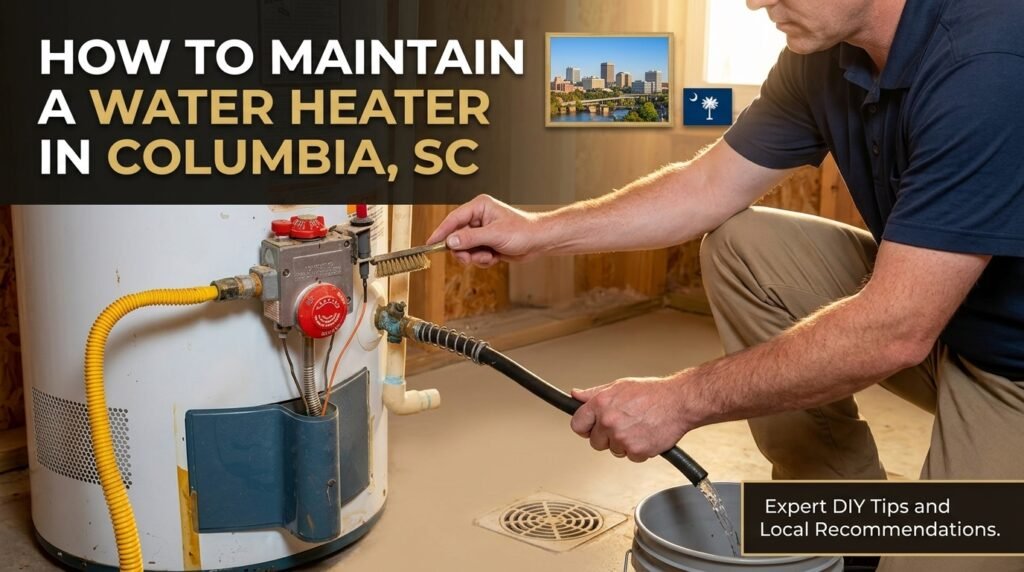
If the tank makes loud knocking sounds, flush the mineral mud out. Shut the main cold supply valve, screw a garden hose onto the bottom brass bib, and drag the other end outside. Go upstairs and open a hot water tap to relieve the vacuum, then open the bottom drain valve to bleed off all that brown gunk.
Resolving Everyday Tank Problems Yourself
Once you pinpoint the glitch, learning how to fix water heater problems keeps repair costs low so you don’t sit around waiting on an expensive service call.
Problem 1: No Hot Water at All
When the tap runs straight cold and never warms up even a bit, the whole heating loop went dead.
Electric units usually kick off the safety breaker, blow the red reset button on the top thermostat, or burn through a heating loop. Gas models typically suffer from a gunked-up thermocouple or a faulty temperature control module.
On electric setups, shut down power at the main panel, pull off the upper access sheet, and press down hard on the red limit switch until you feel a solid snap. Should it trip again shortly after, replace the coil. On gas setups, look closely at the narrow metal tip sitting right next to the pilot burner. If it’s caked in black soot, scrub it clean with a piece of steel wool.
Problem 2: Water is Not Getting Hot Enough
Your shower stays barely lukewarm, or cold water starts leaking into the stream after five minutes.
Usually, this happens when thermostat settings don’t match up, the lower coil gives out, or the internal plastic dip tube snaps. That tube feeds cold incoming water straight down to the tank floor. If it breaks off, incoming cold water mixes right into the hot layer sitting near the top outlet.
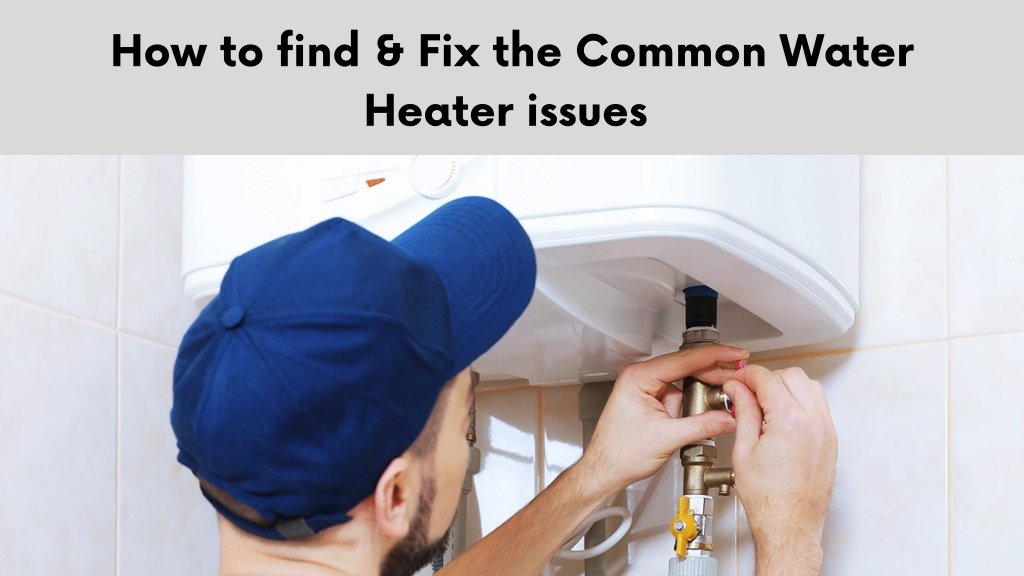
Ensure both temperature dials are set to 120°F. If the settings check out fine, shut off the main supply valve, disconnect the top cold pipeline, and pull the plastic dip tube straight out.
Problem 3: Loud banging or high-pitched squeaking
When a tank starts thumping or squealing, internal pressure or trapped steam is forcing its way out.
Heavy sediment traps water right against the hot bottom plate. The burner boils that trapped pocket of water into steam bubbles, which snap loudly as they burst through the mineral layer. Whistling noises happen when a pressure relief valve sticks or a pipe inlet gets pinched.
Got a thick scale stuck on the tank bottom? Pour a gallon of basic white vinegar straight into the drained tank through the cold water port. Give it a few hours to dissolve the mineral scale inside, then flush the system out with fresh tap water.
Problem 4: Water Leaking Around the Base or Valves
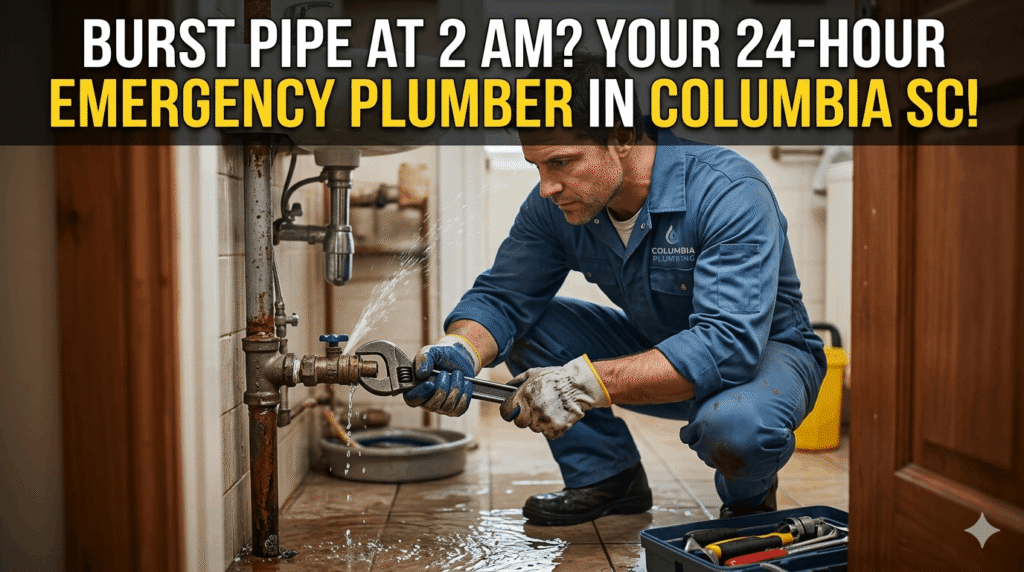
Don’t ignore wet spots near the bottom of your heater. A tiny drip can easily turn into a flooded utility closet. Most times, it’s just a loose fitting up top, a leaking pressure valve, or internal rust that finally broke through the metal wall.
Use a pipe wrench to snug up any loose fittings on top. If the T&P relief valve is dripping down the side pipe, put a bucket underneath, lift the little metal lever for a second to clear out trapped grit, and snap it shut. Put in a new valve if the dripping won’t stop. But when water seeps directly out of the bottom metal seam on the tank itself, the steel body is rusted through, and you’ll need a full unit replacement.
Lifespan Expectations for Storage Tanks
Tanks don’t last forever. Constant water pressure, heat expansion, and harsh mineral rust wear down heavy steel over time.
- Standard Storage Tank Units: Usually last between 8 and 12 years. A sacrificial anode rod inside the tank pulls rust away from the steel walls. Once that rod dissolves completely, rust turns straight onto the tank itself.
- Tankless Units: You can get 15 to 20 years out of one. No big steel drum holding water all day means rust barely has a chance to build up.
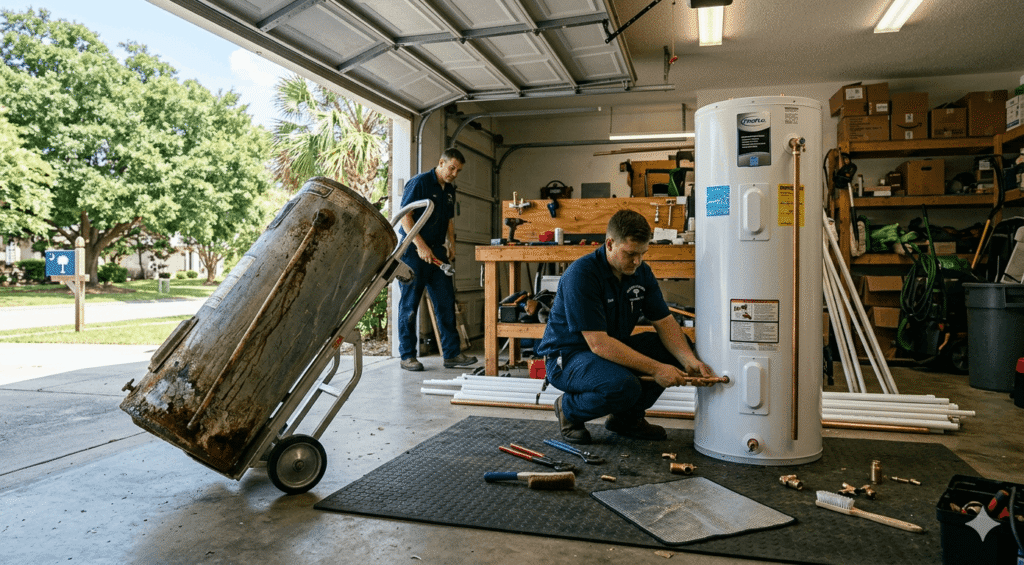
Around the 10-year mark, continuous fixes stop being worth it. A unit dumping rusty water, smelling like metal, or making loud banging noises is ready for the scrap yard. Buying a replacement beats burning money on endless patches.
When a Plumber Needs to Step In
Handling stuff yourself saves cash, sure. But certain water heater issues are flat-out unsafe to mess around with.
If you catch a rotten egg gas odor, drop everything and call a pro right then. Same goes for a cracked tank shell pouring water or electrical work needing new 240V lines. Dealing with main gas supply, pressure regulators, or tankless control boards takes proper tools and local Columbia, SC permits anyway; there’s no reason to risk ruining your house when you can call an experienced local plumber.