Most sewer line problems announce themselves days or weeks before they become emergencies.
A toilet that gurgles when the washing machine drains. A shower that backs up only when someone runs the kitchen sink. These are not coincidences; they are symptoms of a single shared pipe that carries every drop of wastewater from your home to the municipal main or septic tank.
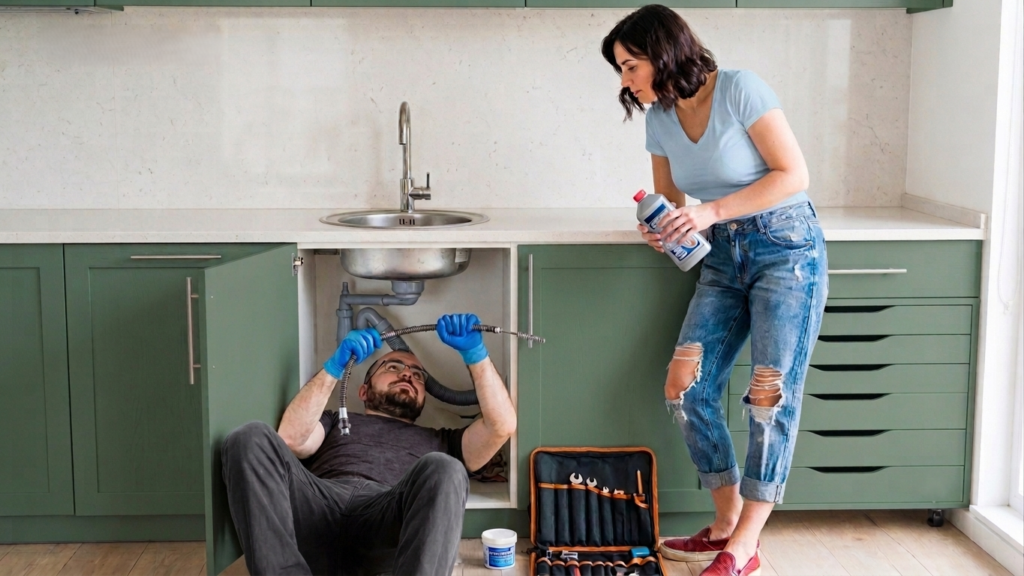
The mistake many homeowners make is jumping straight to a solution. They pour a bottle of drain cleaner down the tub, snake the line themselves, or call for a quick clearing and consider the job done. Six weeks later, the same backup returns.
The cleaning itself wasn’t the mistake. It cleared the blockage, but if the real problem is a cracked joint, root intrusion, a belly, or damaged pipe, the cause is still there and the backup will likely return. .
This guide walks through how to fix sewer lines.Understanding the process of fixing sewer line problems can help homeowners choose the right repair instead of repeatedly clearing the same blockage
Why Sewer Lines Fail
A sewer lateral is a buried gravity pipe. It has no pump, no pressure, and no moving parts. It depends entirely on a consistent downward slope and an unobstructed interior. Anything that disrupts either one causes trouble.
Before deciding on fixing sewer line problems, the cause of the failure needs to be identified.
Tree root intrusion
Roots do not break into healthy pipes. They find existing weaknesses — a hairline crack, a loose joint, a deteriorated gasket — and grow toward the moisture and nutrients escaping through it.
Once inside, a root system spreads into a fibrous mat that catches paper and solids like a net. Willows, poplars, silver maples, and elms are frequent offenders, but any mature tree within twenty or thirty feet of the line is worth noting.
Grease and debris buildup
Cooking fat leaves the sink as a warm liquid and cools into a waxy layer on the pipe wall within a few feet of travel. Over years, that layer thickens and traps everything else:coffee grounds, food particles, and especially “flushable” wipes, which do not break down the way toilet paper does. The pipe’s effective diameter shrinks until a normal load overwhelms it.
Aging and deteriorating pipe
Material matters enormously. Bamboo clay, common in homes built before the 1970s, is durable but brittle and joined in short sections — meaning many joints for roots to exploit.
Orangeburg (bituminized fiber pipe, used roughly from the 1940s through the early 1970s) deforms and delaminates with age and is effectively at the end of its service life everywhere it still exists.
Cast iron corrodes from the inside out, developing a rough, scaled surface that catches debris. PVC and ABS hold up well but are still vulnerable to crushing and shifting.
Cracks and damaged joints
Ground movement, nearby construction, heavy vehicle traffic over a shallow line, and simple age all open gaps. Small offsets at a joint create a lip that catches solids.
Corrosion
In cast iron, hydrogen sulfide gas above the waterline converts to sulfuric acid and eats the crown of the pipe. Lines can look acceptable along the bottom while the top has thinned dangerously.
Shifting or settling soil
Expansive clay soils swell and contract with moisture. Poorly compacted backfill settles over decades. Either can pull a pipe out of alignment or drop a section below grade.
Bellied or sagging pipe
A belly is a low spot in a sewer pipe where the slope reverses. Water and solids collect in this area instead of flowing through the pipe. Bellies can be one of the more frustrating findings during a camera inspection because cleaning may restore proper flow only temporarily—the low spot will eventually fill again.
Collapsed sections
The end stage of most of the above. A collapse block flow completely and cannot be cleaned or lined; the pipe has to be replaced.
Signs You May Need Sewer Line Repair
The single most useful diagnostic question is: is the problem confined to one fixture, or does it involve several?
Following warning signs can help you determine when fixing sewer line problems requires more than a routine drain cleaning.
- Multiple drains are slowing at the same time, especially fixtures on the lowest floor. Basement showers, floor drains, and first-floor toilets sit closest to the main line and back up first.
- A toilet that gurgles or bubbles when another fixture drains. Draining the tub pushes water into a partially blocked line, which forces trapped air back up through the nearest water seal. This is one of the more reliable indicators of a main line restriction.
- The water level in a toilet rises and falls on its own without anyone using it.
- Recurring backups on a predictable cycle. A line that clogs every spring, or every three to four months no matter how careful the household is, has a structural cause — commonly root intrusion or a belly.
- Sewage odor indoors near floor drains or outdoors near the cleanout. A properly sealed system should not smell.
- Wastewater pooling around a floor drain, in a basement, or at an outdoor cleanout.
- Unusually lush, green, or soggy strips of lawn following the path of the line. Leaking wastewater fertilizes and irrigates the grass above it.
- Soggy spots in the yard, which can indicate soil washing into a failed section.
- Slow drains return quickly after a professional cleaning. If a line was cleared properly and clogs again within weeks, the problem is not debris, it is the pipe.
Any one of these on its own may be minor. Two or three together is a strong case for inspecting the line before doing anything else.
How to Fix a Clogged, Blocked, or Backed-Up Sewer Line
The right fix depends on what is stopping the line. A simple blockage can usually be cleared, but recurring backups often point to a problem with the pipe itself.
Homeowners often search for how to fix a backed up sewer line when several drains begin backing up at once.
If sewage is backing up, stop using water until the line is cleared. When several fixtures back up together, especially a basement drain or first-floor toilet, the restriction is usually in the main sewer line rather than one fixture.
Clear the Line First
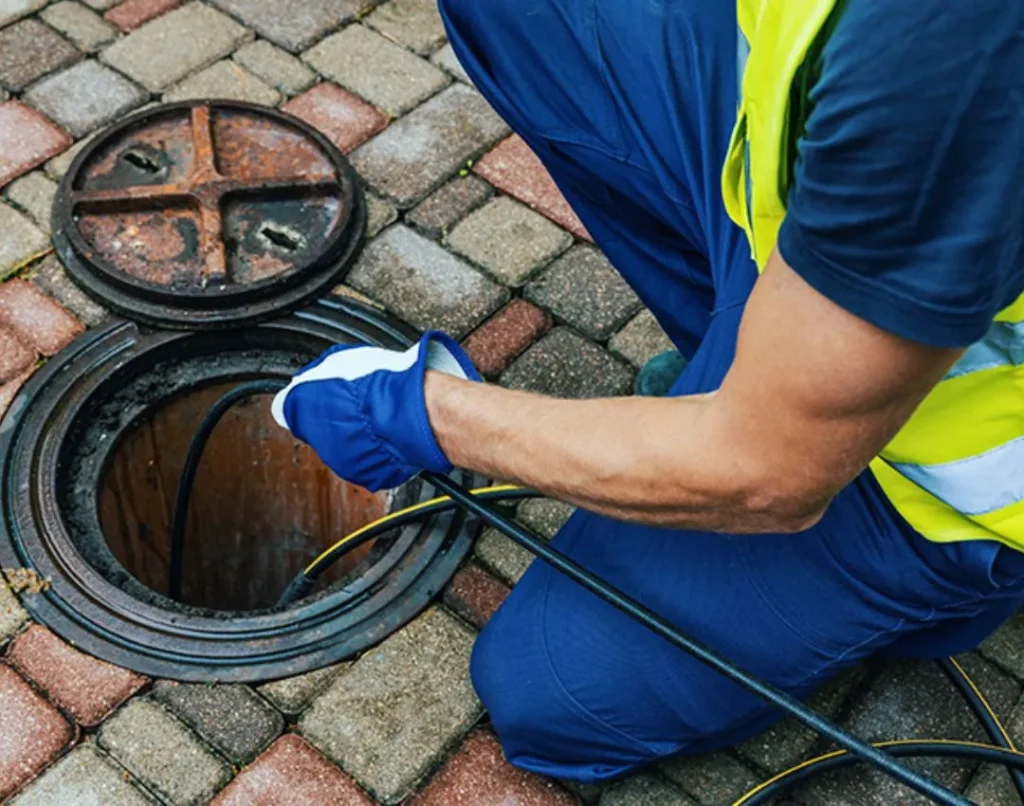
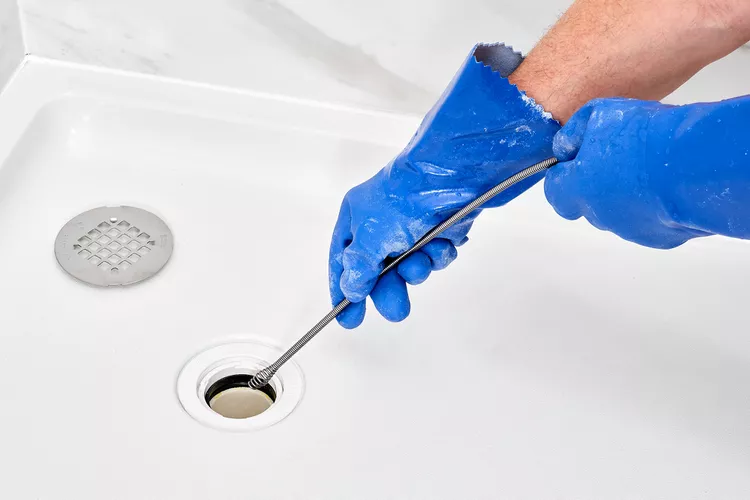
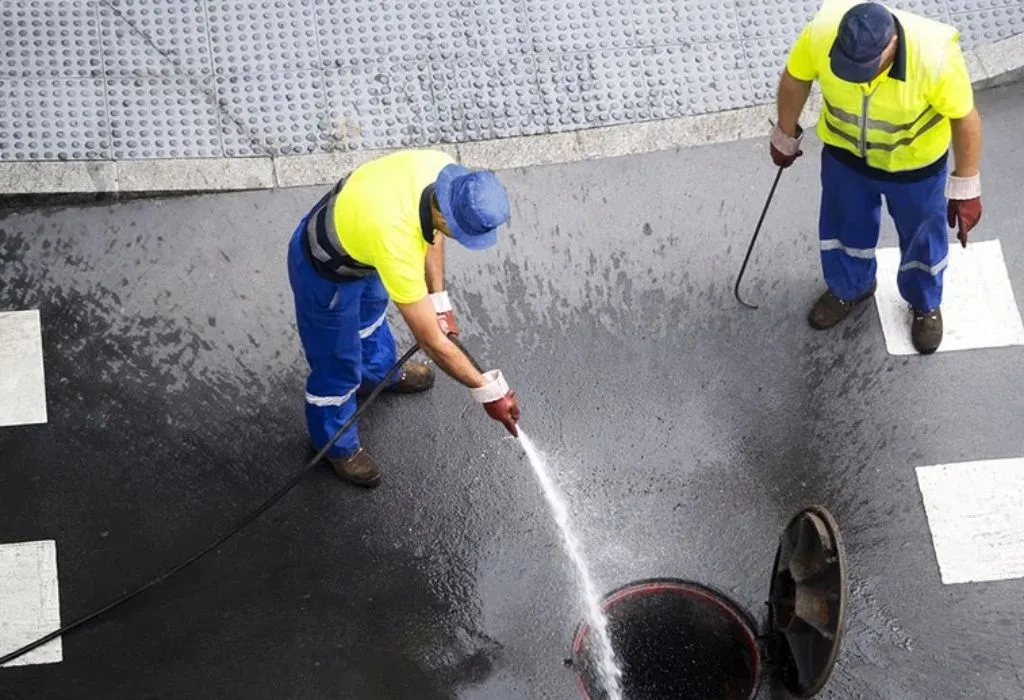
For a single toilet, plunging may be enough. For a main line blockage, a sewer machine can cut through roots, grease, and debris and get the line flowing again. This is often the quickest answer for how to fix a blocked sewer line, but it does not always clean the pipe completely.
Hydro jetting uses high-pressure water to scour buildup from the pipe walls. It is a better option when grease, scale, or heavy root growth is restricting the line. Jetting should not be used blindly on badly deteriorated pipes.
Find the Reason It Keeps Coming Back
Getting the line open is only half the job. If the backup returns, a camera inspection can show whether the problem is roots, a belly, cracked pipe, a shifted joint, or a collapsed section.
That is the key to how to fix a clogged sewer line permanently: clear the obstruction, then find out why it formed.
How to Fix Roots in a Sewer Line
Knowing how to fix roots in sewer line problems starts with identifying why the roots entered the pipe.
Roots enter through cracks and loose joints where moisture is escaping. Cutting the roots restores flow, but it does not close the opening they entered through. Jetting can remove the remaining root material, while a camera shows exactly where the pipe is damaged.
If roots keep returning to the same spot, the lasting fix is to repair, replace, or properly line that section of pipe.
How to Fix Sewer Line Without Digging: Trenchless Options
Trenchless methods rehabilitate a buried pipe through existing access points, usually a cleanout and a small entry or exit pit. For homeowners with mature landscaping, a driveway, patio, or finished basement over the sewer line, knowing how to fix a sewer line without digging up the entire run can make the repair far more practical and affordable
Cured-in-place pipe (CIPP) lining
A resin-saturated felt or fiberglass liner is pulled or inverted into the cleaned host pipe, inflated against the wall with an internal bladder, and cured — with ambient temperature, hot water, steam, or UV light depending on the resin system. The result is a jointless structural pipe formed inside the old one.
CIPP is one of the most common options to fix sewer lines without digging when the existing pipe is structurally suitable for lining.
Suits: cracked or offset joints, root intrusion, corroded cast iron, deteriorated clay, longitudinal cracking, and lines with multiple defects along a continuous run.
Advantages: no trench along the pipe’s length; a seamless interior with no joints for roots to enter; a smooth wall that resists buildup; typically completed in one to two days; landscaping and hardscape stay intact.
Limitations and honest caveats:
- The liner occupies wall thickness, slightly reducing internal diameter. In a properly sized lateral the smoother surface usually offsets this, but on an undersized line it is a real consideration.
- Lining preserves existing geometry. A liner will not correct a belly or a slope problem, it reproduces the sag in new material.
- Branch connections are covered by the liner and must be reinstated by robotic cutter, which requires the right equipment.
- Sharp bends and multiple tight turns complicate installation.
- The host pipe must be substantially intact; a collapse leaves nothing to line against.
Pipe bursting
Pipe bursting is another method contractors may use to fix sewer lines without digging when the existing pipe needs full replacement.
A bursting head is pulled through the old pipe on a cable or rod from an entry pit to an exit pit. The head fractures the existing pipe outward into the surrounding soil while simultaneously drawing a new HDPE pipe in behind it.
Suits: pipe too deteriorated to line, lines needing an upsize in diameter, and full-length replacement where the run is reasonably straight.
Advantages: produces a genuinely new fused-joint pipe rather than a liner; can increase diameter; requires only two access pits instead of a continuous trench.
Limitations:
- Requires pits at both ends, so it is trenchless but not dig-free.
- Displacement of the old pipe can affect nearby utilities and structures; adequate clearance and locates are essential.
- Poorly suited to areas with dense adjacent utilities, shallow lines under structures, or heavy rock.
- Like lining, it follows the existing path — bursting will not fix a slope problem unless the alignment is corrected.
When trenchless is not the answer
Neither method is appropriate when the pipe has fully collapsed, when the line has a significant belly that needs regrading, when severe misalignment means the head or liner cannot pass, or when access points cannot be established. In these cases deleted inspection video is necessary before choosing to fix sewer lines without digging.
Traditional Sewer Line Replacement
Open-cut excavation still has a place, and a contractor who insists trenchless works everywhere is overselling.
Excavation is warranted when:
- The pipe has collapsed. There is no host to line and no continuous path to burst.
- The slope must be corrected. Bellies and back-pitched sections require the pipe to be re-bedded at proper fall — roughly a quarter inch per foot for typical residential four-inch lateral, though local code governs. Only excavation achieves this.
- Offsets are severe. Joints displaced beyond a certain point prevent equipment from passing.
- The failure is structural over a long run, such as fully delaminated Orangeburg.
- The damage is shallow and localized. If a break is six feet down and eight feet from the cleanout, a spot repair by excavation may be simpler and cheaper than mobilizing lining equipment.
- Access for trenchless equipment does not exist, or the route is too convoluted.
A camera inspection helps determine whether fixing sewer line damage requires a targeted repair or full replacement.
How to Prevent Future Sewer Line Problems
Most sewer emergencies are the visible end of a slow process that offered years of warning.
Do not flush wipes:Even wipes labeled “flushable” can stay intact long enough to catch inside the sewer line. Paper towels, floss, cotton items, and cat litter can cause the same kind of trouble.
Keep grease out of the drain: Pour cooking fat into a container and discard it in the trash. Hot water and dish soap move grease past the trap but do not stop it from congealing further down the line.
Use strainers in kitchen and shower drains, and clean them regularly.
Take recurring clogs seriously:A line that needs clearing more than about once a year has a structural cause worth identifying. Repeated cleanings are a payment plan on a problem that is not going away.
Know your tree situation: If mature trees sit within roughly twenty to thirty feet of the line’s path, assume roots are a factor eventually. Plant new trees well away from the lateral. When removing a tree near the line, remember roots already inside the pipe will die and decay in place, worth a camera check afterward.
Locate your cleanout now, not during a backup:Mark it, keep it clear of mulch and plantings, and make sure it is accessible. If your home has no accessible cleanout, adding one is a modest investment that reduces the cost of every future service call.
Schedule periodic camera inspections if your home was built before the 1980s, sits on clay or Orangeburg pipe, has mature trees nearby, or has a history of backups. Every two to three years is reasonable for an at-risk line; annually if problems recur.
Bringing It Together
Fixing a sewer line well is mostly a matter of sequence. Notice the early signs: the gurgling toilet, the drains that slow together, the patch of lawn that will not dry out and treat them as information rather than nuisance. After Camera Inspection choose the method that matches the finding: jetting for buildup, lining for cracks or roots when the pipe is still in good shape, bursting when the old pipe needs to be replaced, and excavation for collapsed pipes or bad slopes.
Sewer problems rarely wait for business hours. If yours has already backed up, we run 24 hour plumbing cover across Columbia and the Midlands.